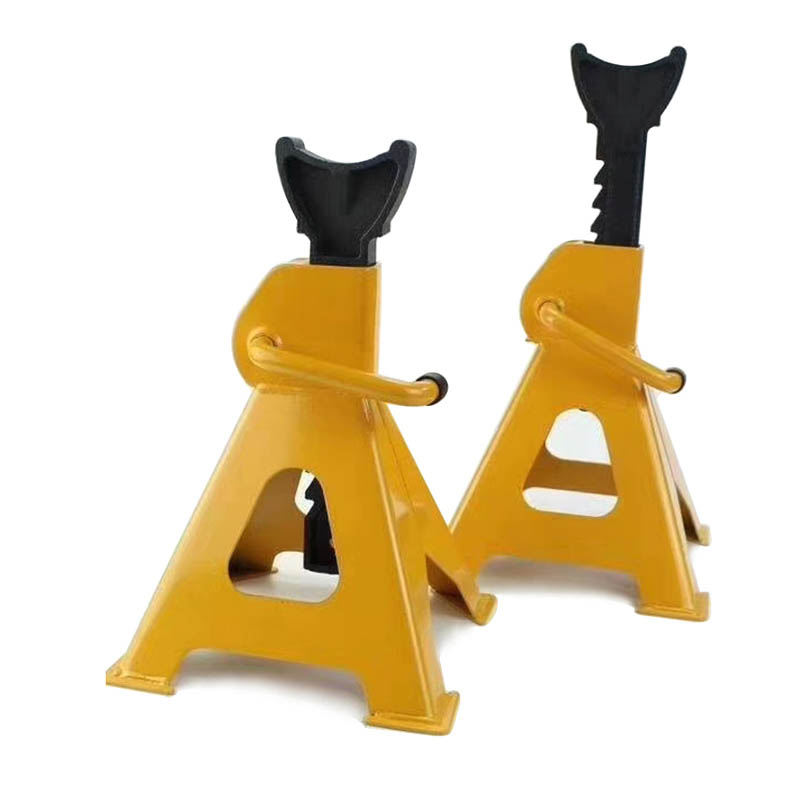
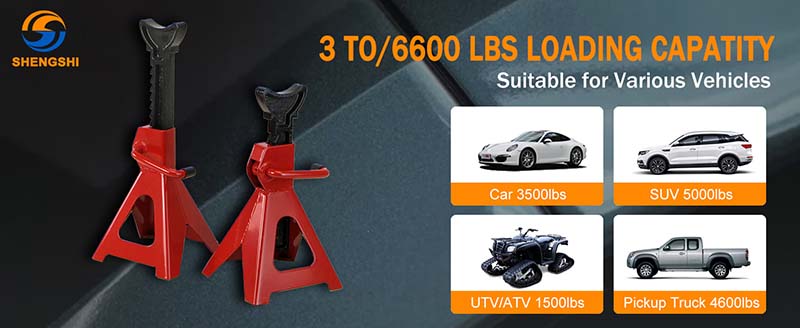
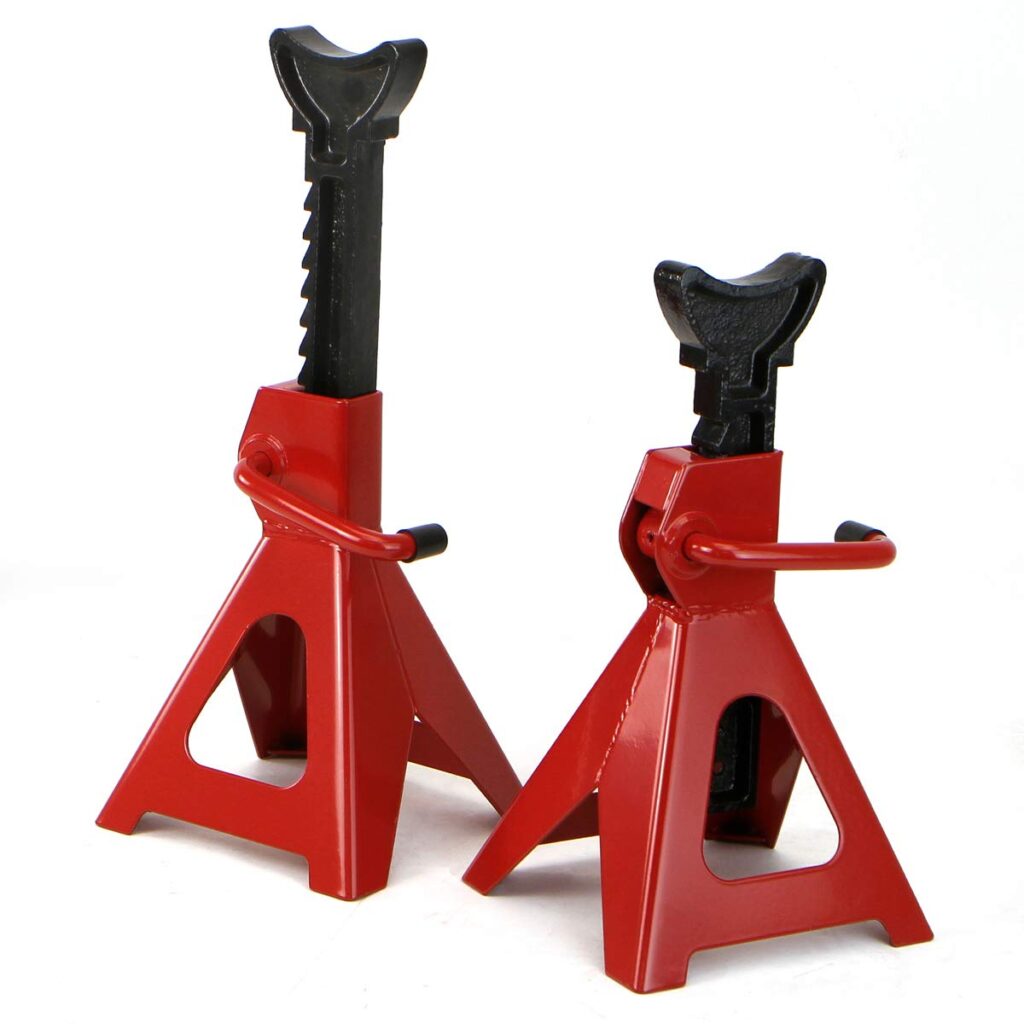
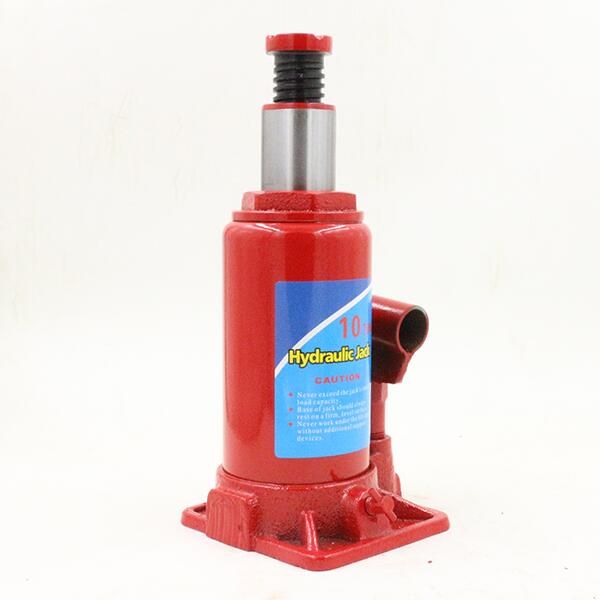
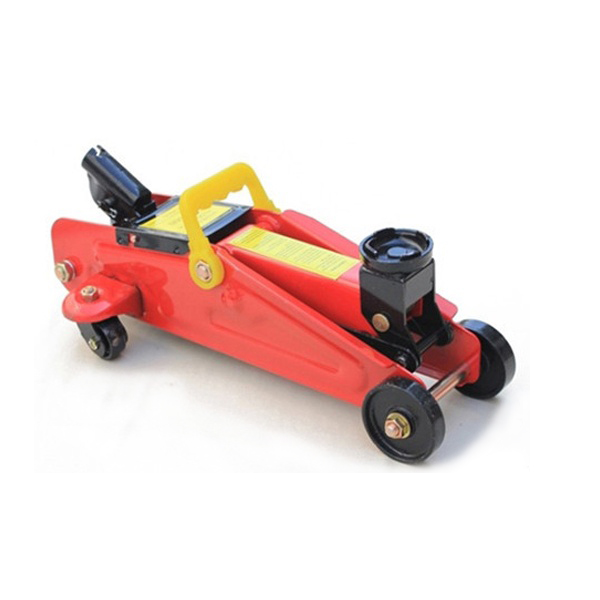
The core function of jack standsis to provide stable and long-term support for the vehicle being lifted, preventing the jack from failing due to sudden situations such as hydraulic leakage or unstable force, thus preventing the vehicle from falling and replacing the jack in bearing the weight of the vehicle body.
So how do you use jack stands safely?
1. Preparation before use
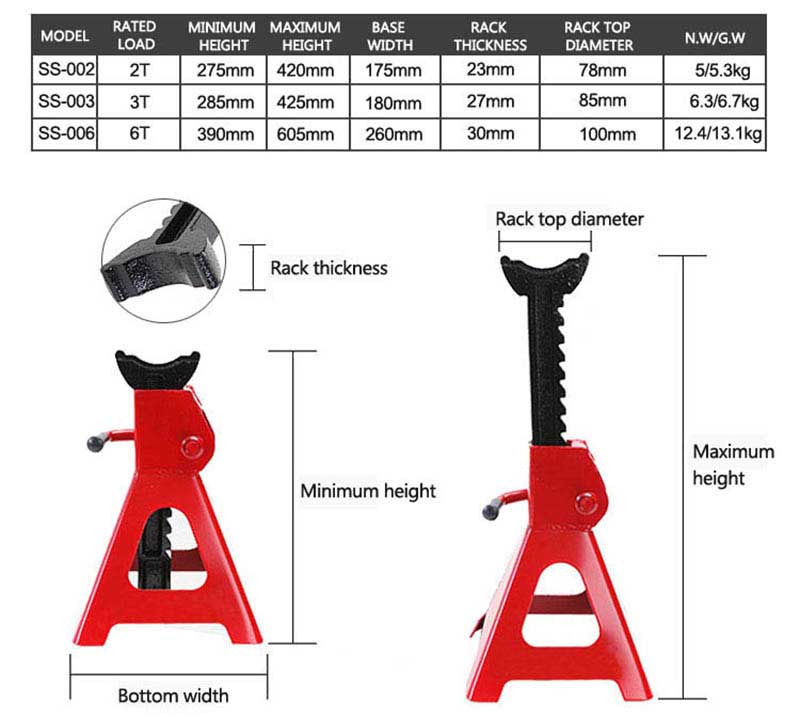
Select a jack stand that matches the vehicle’s weight. The rated load capacity must be ≥ 1/2 of the vehicle’s curb weight, and the jack stand must be in good condition without deformation or cracks.
Park the vehicle on a level, hard surface, engage the handbrake and engage a gear (1st or reverse for manual transmissions, P for automatic transmissions), securing the non-supported wheel with wheel guards.
Identify the vehicle’s designated support points (refer to the vehicle manual), avoiding vulnerable areas such as the fuel tank and brake lines.
2. Correct operating procedures
First, use the jack to lift the vehicle to the target height (slightly higher than the jack stands support height). When lifting, the jack must be perpendicular to the ground, and a non-slip mat should be placed at the bottom.
Slowly move the bracket directly under the support point, adjust its height to ensure it is smoothly and firmly attached to the support surface, and ensure that the bracket is in firm contact with the vehicle.
Slowly release the jack, allowing the vehicle’s weight to fully transfer to the jack stands. After removing the jack, gently push the vehicle to confirm there is no wobbling.
3. Precautions during use
It is strictly forbidden to use jacks alone to support vehicles during operation. Jack stands must be used, and at least two jack stands must be used on the same side (placed symmetrically).
When working, avoid staying under the vehicle for too long, do not perform operations that violently shake the vehicle, and keep tools and your body away from the vicinity of the support point.
If multiple sides need support, operate one side at a time, securing one side before lifting the other. Do not lift multiple unsupported sides of the vehicle simultaneously.
4. Post-use cleanup
First, use a jack to lift the vehicle, causing the support frame to be removed from its load-bearing state, then remove the jack stands.
Slowly lower the jack to allow the vehicle to land smoothly. Remove the wheel chocks and jack, and check the support points for damage.
In what situations are jack stands needed?
1. Core Use Cases
Tire changing: When temporarily changing a spare tire or replacing a tire, using a jack stand can prevent the jack from failing and causing danger, and make the operation easier and more convenient.
Chassis maintenance: When inspecting or repairing chassis parts (such as brake pads, suspension, oil lines, etc.), it is necessary to work under the vehicle for a long time. Jack stands can provide continuous and stable support.
Tire maintenance: When performing dynamic balancing of tires, installing tires after repair, or cleaning foreign objects from tire treads, the vehicle needs to be kept at a fixed height. Jack stands can help with positioning.
Chassis Cleaning/Painting: Cleaning chassis stains and applying rust inhibitors require the vehicle to be kept elevated; the jack stands ensure safety during the process.
2. Inapplicable scenarios
When only temporarily lifting a vehicle (such as briefly checking tire pressure) and not requiring prolonged operation, a jack can be used alone without jack stands.
In environments where the vehicle is severely tilted or the ground is soft and uneven, the stands cannot provide stable support and are therefore prohibited from use.
If the support points do not meet the vehicle’s requirements (such as vulnerable areas or non-designated support points), do not force support using brackets.
Which type of jack stands should be selected for different types of vehicles?
The key to choosing the right jack stands is “matching the vehicle weight + adapting to the vehicle body structure”. The differences in requirements between different vehicle models mainly lie in the load-bearing and support methods.
1)The core principle of selecting a bracket according to vehicle type
The rated load capacity of the stand must be at least half the vehicle’s curb weight. Prioritize models with higher rated load capacity (leaving a safety margin).
The stand’s support surface must be in close contact with the vehicle’s support points to avoid uneven stress caused by point contact.
2)Specific selection suggestions for different car models
Key requirements: Rated load capacity ≥ 1 ton; support surface is flat or slightly curved; suitable for thin steel plate support points on car chassis to avoid scratching the chassis.
Compact SUV / Mid-size sedan (curb weight 1.5-2.5 tons)
Recommended types: Thickened scissor stands, jack tray stands.
Key requirements: Rated load capacity ≥ 1.5 tons, high-strength steel frame material, adjustable support surface angle, suitable for SUVs with higher chassis clearance and thicker support beams.
Key requirements: Rated load capacity ≥ 2.5 tons, larger base area (enhanced stability), anti-slip textured support surface, suitable for the robust frame or chassis longitudinal beams of off-road vehicles.
Light trucks/vans (curb weight over 4 tons)
Recommended types: Professional heavy-duty hydraulic supports, multi-point combination supports.
Key requirements: Rated load capacity ≥ 1/3 of the vehicle’s curb weight (single support); multiple supports must be used symmetrically; the support surface must be wide-width and compatible with the thickened crossbeams of truck frames.
3)General selection considerations
Avoid using small stands to support heavy vehicles, or heavy stands to support small cars (mismatched support surfaces can damage the vehicle body).
Prioritize stands with locking mechanisms to prevent accidental slippage during use.
If the vehicle’s support points are round or irregularly shaped, a special adapter is required to ensure a proper fit.
Click on our contact information +8618713779288 to learn more about our products.